
Reducing
AIDS-associated
Meningitis Mortality​

How to DREAMM and save lives from meningitis within routine care services in low-and middle-income countries.

What is DREAMM?

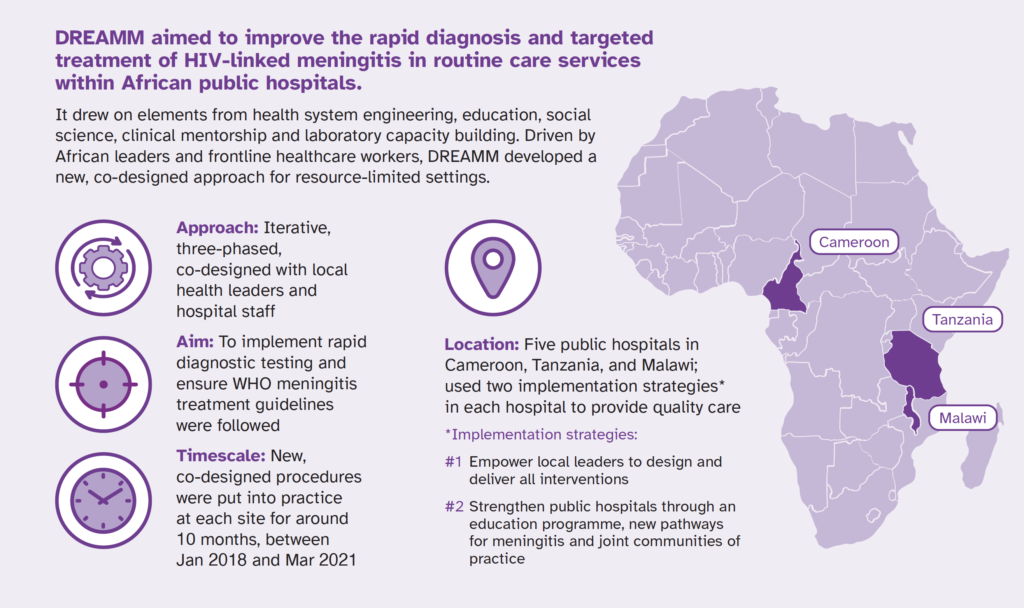
DREAMM is a joint European and African research partnership that aimed to develop, implement, and evaluate pragmatic implementation strategies to reduce mortality from HIV-related meningitis in public hospitals in Cameroon, Malawi, and Tanzania within routine care.  The project was divided into three phases: Observation, Training, and Implementation.

The main intervention was the implementation of a step-by-step algorithm (or decision-making tool) for rapid diagnosis and targeted treatment of HIV-associated meningitis.  The four main causes of central nervous system infections that include meningitis were included:

  1. Cryptococcal meningitis (a fungal type of meningitis)
  2. Tuberculosis meningitis (due to tuberculosis affecting the central nervous system)
  3. Bacterial meningitis
  4. Cerebral toxoplasmosis (a parasitic infection of the brain)
UNC-Project-Malawi-e1692278182871.png
EDCTP-and-EU-logo.png
NIMR-Tanzania-e1692309044807.jpg
Hopital-Central-de-Yaounde.png
Institut-Pasteur.png
sgul-logo-green-e1692278281307.png
Lighthouse.png
logo_anrs

Quick Facts

on AIDS-associated Meningo-encephalitis Mortality

1

UNAIDS estimates there are approximately 650,000 often preventable deaths from HIV yearly, despite the roll out of antiretroviral therapy.

2

Tuberculosis and meningitis are leading causes of these HIV-related deaths. Central nervous system infections including meningitis may cause up to a third of deaths.

3

Rapid diagnosis and targeted treatment according to the cause of meningitis is needed to save lives.

4

Health system deficiencies and a lack of translation of trial findings into routine care are important drivers of preventable HIV-related deaths.

Implementation Strategies

Two implementation strategies were devised iteratively during the observation and training phases.

Empowerment of local leadership to design and implement all interventions

A health system strengthening approach for public hospitals was adopted to deliver quality care through:

a) An open access, co-designed education program for front-line healthcare workers and laboratory technicians
b) Optimised clinical and laboratory pathways for rapid diagnosis and targeted treatment according to meningitis cause
c) Joint clinical and laboratory communities of practice which provided clinical mentorship and ongoing laboratory capacity building
“ This particular project has been innovative in the sense of engaging communities and affected populations in such a complex medical topic and has brought together clinicians and civil society organisations to work well together towards one objective, of ensuring better treatment and care for people living with and affected by advanced HIV.

The Projects focus on strengthening African leadership in innovative research and clinical trials, systems strengthening as well as addressing and advocating for quality affordable treatment options is what makes it unique.

Often, you don’t find bold clinician advocates working together with civil society advocates towards common goals.  They work in silos, and different bubbles and seen on opposite and sometimes with suspicion . I believe the project has achieved a lot in such a short time because of this unique and critical collaboration.”
Amanda Banda
Malawian Civil Society Activist

DREAMM Findings

DREAMM implementation intervention and strategies substantially reduced all-cause two-week mortality from 49% to 24% among people living with HIV presenting to public hospitals in Africa with suspected HIV-related CNS infection.

Health system engineering combined with a multidisciplinary approach driven by local leadership proved a powerful means for enacting quality care. DREAMM effectively translated results of recent clinical trials closing the substantial gap between clinical trial and routine care outcomes.

Skip to content